knowledges
Why Are Titanium Electrodes Used in Chlorine Generation Plants?
2026-07-01 16:58:04
To keep producing chlorine in harsh conditions, chlorine plants need materials that are stable and long-lasting. Among all the choices that were available, titanium electrode technology has become the standard. Chemical processing plants, water treatment plants, and chlor-alkali producers worldwide believe in it. These electrodes have great resistance to corrosion and great electrical efficiency. They provide the performance stability that large-scale industrial operations need. These parts are essential for modern chlorine production systems because they can work in harsh chemical conditions and keep their current efficiency.
|
|
|

Understanding Titanium Electrodes in Chlorine Generation
What Are Titanium Electrodes?
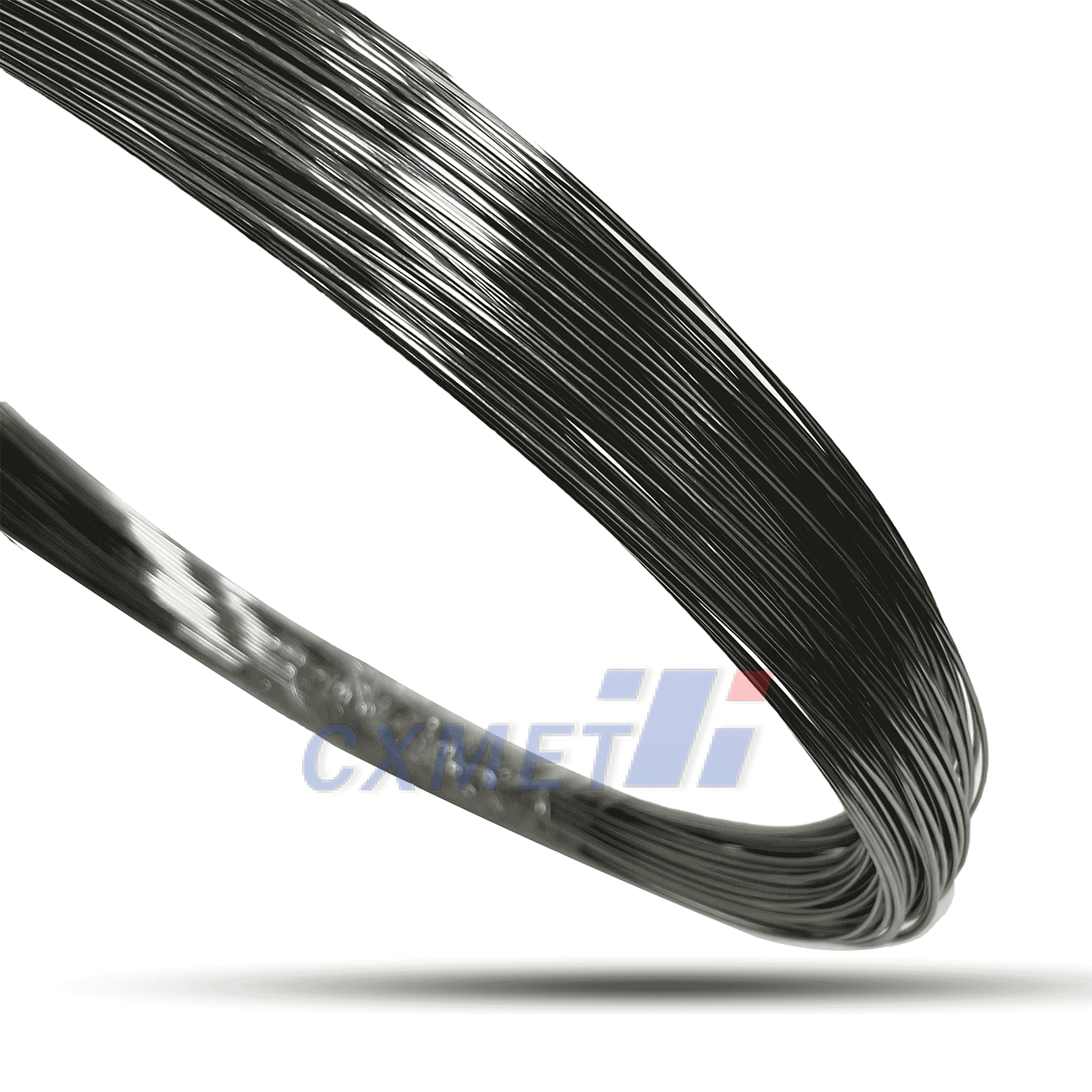
A titanium electrode is made up of a very pure titanium base, which is usually made from Grade 1 or Grade 2 titanium that meets ASTM B265 standards. Specialized coatings improve electrochemical performance, and the base offers mechanical strength and physical stability. The chlorine evolution reaction (CER) works well with these materials, which are usually Mixed Metal Oxides (MMO) like iridium oxide (IrO₂) and ruthenium oxide (RuO₂). The titanium base is very good at conducting electricity and has natural passivation qualities that keep it from rusting in salty solutions.
The Electrochemical Mechanism Behind Chlorine Production
Chloride ions move to the anode surface during electrolysis and are oxidized there, creating chlorine gas. The MMO coating on the titanium electrodes drops the overpotential needed for this process. This means that less energy is used and the current flows more efficiently. The carefully planned surface area maximizes catalytic activity and makes sure that the current flows evenly across the electrode face. This even spread stops hotspots from forming in one place, which could speed up the coating's breakdown or put operations safety at risk. In industrial settings, operating temperatures can reach up to 80°C, and current levels are close to 10 kA/m².
Types of Titanium Electrodes for Industrial Applications
Titanium electrodes can be shaped in different ways to meet the needs of a particular process. Mesh electrodes have a lot of surface area for their size, which makes them perfect for small electrolytic cells that need to make good use of room. Rod electrodes are good for situations that need strong mechanical support and easy installation. Plate electrodes, which are usually 1000 mm x 500 mm x 3 mm, are used in most large-scale chlor-alkali processes because they are easy to maintain and can be scaled up or down. The coating's thickness is usually between 2 and 5 micrometers, and is set to balance how well it works at first with how long it lasts.
Advantages of Titanium Electrodes Over Alternative Materials
Superior Chemical Resistance in Harsh Environments
Many common electrode materials break down very quickly in chlorine-generating settings because they are acidic. Graphite electrodes are cheap at first, but they wear down over time due to chemical oxidation and mechanical damage, so they need to be replaced more often, which raises the cost of operation. When carbon-based anodes are introduced to new chlorine, they break down into carbon dioxide, which lowers the purity of the electrolyte. Platinum electrodes are very resistant to corrosion, but they are too expensive for large-scale applications. When chlorine hits stainless steel, it breaks down badly because of pitting and fissure corrosion.
Titanium electrodes can handle these harsh chemical conditions because they are naturally passive and have an oxide layer that protects them. The MMO layer adds extra protection and keeps the electrode's catalytic activity throughout its useful life. Because chemicals are more stable, there is less need for upkeep, fewer unplanned shutdowns, and the same quality of product over years of constant service.
Extended Service Life and Economic Benefits
Service life is an important cost factor for buying managers to consider when choosing electrodes. Graphite anodes may only last a few months under heavy use, but titanium electrodes with MMO coatings can work effectively for five to ten years or longer if they are properly kept. Once the catalytic layer wears off, the titanium base can be chemically cleaned and recoated, which saves a lot of money in the long run compared to replacing the whole electrode.
Accelerated life testing methods show that electrodes are durable; one hour of testing is equal to hundreds of hours of use in the field. This longer lifespan cuts down on production stops, lowers the cost of keeping extra parts in stock, and makes it easier for plants to plan their schedules. Titanium electrodes cost more up front, but they pay off in the form of a lower total cost of ownership over the course of their useful life.
Enhanced Electrochemical Efficiency and Safety
Electrochemical efficiency has a direct effect on energy use, and energy costs make up a big part of the cost of making chlorine. Titanium electrodes that have been treated with improved MMO formulations are more efficient at turning electrical energy into chemical products rather than waste heat than other materials. The strong construction makes sure that the mechanical stability is maintained even when temperatures change and current densities change, which are common in industry settings.
Titanium wires are also preferred for safety reasons. Because they are stable in size, they don't bend or make contact between electrodes, which could lead to dangerous short circuits. The material is resistant to rapid failure modes, which lowers the chance of damaging cells badly or releasing dangerous chemicals. When operators know that their equipment works reliably in tough situations where safety must not be compromised, they feel more confident.
Applications and Performance Optimization in Chlorine Plants
Chlor-Alkali Electrolysis Cells
Manufacturing chlor-alkalis is where industrial titanium electrodes are most often used. By electrolyzing sodium chloride brine, these plants make hydrogen, chlorine gas, and caustic soda (sodium hydroxide). Because it can handle high current levels and not be damaged by chlorine or hypochlorite, the electrode is perfect for membrane cell, diaphragm cell, and mercury cell technologies. Titanium works well with ion-exchange membranes and concentrated acid conditions, which is especially helpful for modern membrane cells.
Industrial Water Treatment Systems
Chlorine is used in water treatment plants to cleanse and oxidize the water. Electrochlorination systems use salt or brackish water to make chlorine on-site, so dangerous chlorine gas doesn't have to be moved or stored. Titanium electrodes work really well in these situations because they can handle changes in salt, chemical contamination, and intermittent operation. This technology is used by municipal water companies, offshore platforms, and marine boats to treat water in a way that is safe, efficient, and leaves little of an impact on the environment.
Best Practices for Extending Electrode Lifespan
Paying attention to operational factors and maintenance routines is needed to get the most out of electrode service life. Keeping the right current density within the manufacturer's guidelines stops the layer from wearing off faster. Monitoring the cell voltage on a regular basis can help find coating depletion before it leads to total failure; a quick rise in cell voltage is usually a sign of coating degradation. Making sure that the electrolyte makeup, temperature, and pH levels are all right saves both the coating and the titanium base from extra stress.
Regular check plans help find mechanical harm, coating problems, or electrical connection problems early on. When the voltage goes above what is considered safe, replacing or recoating the electrodes in a fast manner stops damage to other parts of the cell. Plants that use systematic tracking programs regularly get longer electrode life and more predictable replacement cycles. This makes it easier to plan budgets and keep track of inventory.
Procurement Considerations for Titanium Electrodes
Key Selection Criteria Based on Operational Requirements
When buying titanium electrodes for their buildings, procurement teams have to think about a number of things. Coating makeup and thickness are determined by the current density. For example, ruthenium-based coatings work best for chlorine evolution in brine electrolysis, while iridium-based formulas work best for oxygen evolution in acidic electrowinning. The shape of the electrodes should fit the design of the cell, taking into account things like the distance between the electrodes, the flow patterns, and how to handle gas bubbles.
The features of the operating area affect the choice of material grade. Titanium grades with higher purity are better at resisting rust in the harshest environments, while industrial grades are cheaper when conditions aren't as bad. Customizable dimensions make sure that the best fit is found within current infrastructure. This keeps cell changes from being too expensive or performance from parts that don't work well with the system.
Evaluating Suppliers and Ensuring Quality Assurance
Getting titanium electrodes from makers with a lot of experience is much better than getting them from generic sources. When you deal directly with the factory, you get access to scientific knowledge, the ability to customize products, and prices that are lower than those offered by wholesalers. Well-known companies have strict quality control systems that make sure the consistency of the coating, the cleanliness of the substrate, and the accuracy of the measurements meet or beat industry standards.
Certification paperwork gives buyers trust. Suppliers you can trust will give you material certificates that prove the grade and chemical makeup of the titanium, as well as covering composition analyses and reports on the size and shape of the pieces. Warranty support and after-sales service are what set high-quality providers apart from low-quality ones. Quick expert support helps fix practical problems, improve performance, and plan maintenance activities well. Different suppliers have different minimum order amounts, but in the long run, it's often better to build relationships with makers who understand your unique application needs than to buy something based on price alone.
Future Trends and Innovations in Titanium Electrodes for Chlorine Generation
Emerging Coating Technologies and Material Innovations
Performance keeps getting better thanks to research into improved MMO coatings. Nanostructured materials have more active surface area without adding more geometrical dimensions. This makes them more catalytically efficient while keeping their mechanical stability. For certain working situations, doped metal oxide formulations find the best balance between activity, selectivity, and longevity. Hybrid electrode designs with multiple functional layers offer even longer service life by keeping the catalytic activity on the top while protecting the materials below.
The creation of coatings that are immune to reverse polarity opens up more uses. Traditional MMO electrodes can't handle reversing polarity very often, but special versions make it possible for them to clean themselves, which is useful for water treatment systems that get clogged up easily. These improvements deal with real problems in the workplace while keeping the main benefits that make titanium the best electrode material.
Market Trends and Sustainability Considerations
More people are choosing electrolytic chlorine generation over older methods that involve moving and storing chlorine gas because they care more about the environment. Distributed generation systems make operations safer and lower the carbon footprint that comes with transportation. Titanium electrodes make these green chemistry methods possible because they are reliable, work well, and last a long time.
Lifecycle control of electrodes is also part of sustainability. The ability to recoat titanium surfaces cuts down on the amount of trash and raw materials needed compared to technologies that use disposable electrodes. Recycling programs take used coatings and turn them back into useful metals. This closes the loop on materials that would otherwise have to be thrown away. As companies are put under more and more pressure to show they care about the environment, titanium electrode technology's ability to be recycled and long life span help companies meet their sustainability goals while also making money. Supply chain issues are becoming more and more important in buying plans. Bulk buying deals with dependable makers protect against market instability by keeping prices stable and ensuring supply. The global chlorine generation market keeps growing because more people want PVC, water treatment, and chemical intermediates.
Conclusion
As the best way to make chlorine, titanium electrodes have been used in a wide range of industrial settings and have proven to work well every time. Because they don't rust, work well with electricity, and last a long time, these materials have real economic and practical benefits that other materials can't match. As coating technologies improve and concerns about ecology change how businesses work, titanium electrodes will keep changing to deal with new problems. At the same time, they will keep being reliable enough for chlorine makers to keep running their safe, cost-effective operations.
FAQ
How long does an MMO-coated titanium electrode last in chlorine service?
The working current density and electrolyte makeup have a big effect on the service life. If you keep MMO-coated titanium electrodes in good shape, they can work continuously for five to ten years in chlor-alkali settings with current levels between 2 and 4 kA/m². Accelerated life testing methods show that something will last a long time; one hour of testing in the lab is equal to hundreds of hours of use in the field. Plants that use more current or don't handle their electrolytes properly may have shorter lifespans. This shows how important it is to follow the manufacturer's instructions and set up regular tracking programs.
Can the titanium substrate be reused after coating depletion?
Although the catalytic layer wears off, the titanium base keeps its structural integrity and ability to fight corrosion. Manufacturers can chemically remove the old coating and put on new MMO layers, which restores electrochemical performance for a lot less money than buying a new electrode. This ability to recoat greatly lowers long-term capital costs and supports environmental goals by increasing the useful life of materials and lowering the amount of trash that is produced.
What distinguishes ruthenium-iridium coatings from iridium-tantalum formulations?
The goal electrochemical reaction determines the best coating makeup. Ruthenium-based mixtures are very good at speeding up the release of chlorine in alkaline or neutral brine electrolysis situations. They have good performance and a long useful life. Iridium-based coatings are more stable in acidic environments and oxygen evolution reactions. This makes them ideal for electrowinning and some water treatment tasks where the pH level is different from what is normally found in chlor-alkali processes.
Do titanium electrodes handle polarity reversal operations?
Standard MMO-coated titanium electrodes are made to work with steady polarity and can't handle frequent polarity changes without breaking down faster. There are special reversal-resistant coating formulas for uses that need to switch polarities on a regular basis, like self-cleaning electrochlorination systems that need to be able to work in a variety of ways to avoid fouling. During the decision process, procurement teams should make this requirement clear to make sure they get the right finishing technology.
What indicators signal impending electrode failure?
Monitoring the voltage in cells is the most accurate way to find out early on when the layer is wearing away. As the active layer gets thinner, the working voltage slowly rises while the current stays the same. This means that the catalytic efficiency is decreasing. High voltages can be a sign of a failing layer or a problem with the electrical link. Significant drops in current efficiency, which can be seen by less chlorine production compared to electrical input, also show that the electrode is breaking down and needs to be looked into and possibly replaced before it fails.
Partner with CXMET for Premium Titanium Electrode Solutions
CXMET Technology makes titanium electrodes that are made to meet the unique needs of chlorine generation plants. Our electrodes are made of high-purity Grade 1 and 2 titanium plates that can be coated with IrO₂, RuO₂, or Pt depending on your needs. We have been making things for more than 20 years and have more than 80 professional workers. Procurement managers and plant engineers need our technical know-how and quality assurance. As a reliable titanium electrode maker based in China's Titanium Valley, we offer low factory-direct prices, flexible sizes, and quick customer service after the sale. Get in touch with our team at sales@cxmet.com to talk about your unique needs and find out how our corrosion-resistant electrode options can help you make more chlorine.
References
1. O'Brien, T.F., Bommaraju, T.V., & Hine, F. (2005). Handbook of Chlor-Alkali Technology. Springer Science+Business Media.
2. Schmittinger, P. (2012). Chlorine: Principles and Industrial Practice. Wiley-VCH Verlag GmbH & Co.
3. Trasatti, S. (2000). Electrocatalysis: Understanding the success of DSA. Electrochimica Acta, 45(15-16), 2377-2385.
4. Karlsson, R.K.B., & Cornell, A. (2016). Selectivity between Oxygen and Chlorine Evolution in the Chlor-Alkali and Chlorate Processes. Chemical Reviews, 116(5), 2982-2028.
5. Chen, G. (2004). Electrochemical technologies in wastewater treatment. Separation and Purification Technology, 38(1), 11-41.
6. Comninellis, C., & Chen, G. (2010). Electrochemistry for the Environment. Springer New York.